Protein Science
How Much Protein Do You Need Per Day?
Most adults need more protein than the RDA of 0.8 g/kg. See how much you need per day by weight, age and goal, per meal, and how much is too much.
Written by
Hasan Gagai
Co-Founder, SKEWERBROS
How Much Protein Do You Actually Need? Why the RDA Is a Floor, Not a Goal.
The official number tells you how to avoid falling short. Here is how much protein actually supports muscle, recovery and fat loss, by body weight, age and goal.
The RDA of 0.8 g of protein per kg of body weight is the minimum to prevent deficiency, not the amount that best supports muscle, recovery or fat loss.
Most active adults do well on 1.2 to 1.6 g/kg a day, the range the 2025-2030 Dietary Guidelines for Americans now recommend. For a 75 kg (165 lb) adult, that is 90 to 120 g.
Muscle gains from extra protein level off at about 1.6 g/kg on average, with some people still benefiting up to 2.2 g/kg, especially while cutting.
About 0.4 g/kg per meal over at least 4 meals is a well supported target. Your body can use far more than 30 g in one sitting.
In healthy adults, higher protein intakes have not been shown to harm the kidneys or bones. If you have kidney disease, follow your doctor's advice.
Ask ten people at the gym how much protein you need and you will hear ten different numbers. Ask the official reference and you get one: 0.8 grams per kilogram of body weight. The trouble is that this number answers a different question from the one most people are asking.
This guide walks through where the official number came from, what the research says about protein for muscle, fat loss and ageing, how much you can use in one meal, and whether there is such a thing as too much. Then it puts it all together in a single day of eating.
How Much Protein Do You Need Per Day?
Most healthy adults who exercise do best on 1.2 to 1.6 grams of protein per kilogram of body weight per day, or about 0.55 to 0.75 grams per pound. For a 75 kg (165 lb) adult, that is 90 to 120 g a day. The RDA of 0.8 g/kg is the minimum to avoid deficiency, not the target.
That range comes from decades of research showing benefits for muscle, recovery and appetite above the RDA [Phillips 2016], and it is the range the 2025-2030 Dietary Guidelines for Americans adopted [Dietary Guidelines 2025-2030]. Aim for the upper half if you train hard, are cutting or are over 65. Use Table 1 to find your number.
Table 1. Daily protein by body weight (grams per day)
Body weight | RDA minimum (0.8 g/kg) | Active adults (1.2 g/kg) | Building muscle (1.6 g/kg) | Upper useful range (2.2 g/kg) |
|---|---|---|---|---|
55 kg (121 lb) | 44 | 66 | 88 | 121 |
65 kg (143 lb) | 52 | 78 | 104 | 143 |
75 kg (165 lb) | 60 | 90 | 120 | 165 |
85 kg (187 lb) | 68 | 102 | 136 | 187 |
95 kg (209 lb) | 76 | 114 | 152 | 209 |
By body size, activity level and goal
Mostly sitting, not training: 0.8 to 1.0 g/kg covers your needs.
Training most weeks: 1.2 to 1.6 g/kg [Phillips 2016]. Sports nutrition experts recommend 1.4 to 2.0 g/kg for most people who exercise [Jäger 2017].
Building muscle: about 1.6 g/kg, up to 2.2 g/kg [Morton 2018].
Cutting while training: 1.6 to 2.4 g/kg, with lean, experienced lifters going higher still [Longland 2016] [Helms 2014].
Does age change how much protein you need?
Yes. Older muscles respond less to the same dose of protein, a change researchers call anabolic resistance. An international expert group recommends 1.0 to 1.2 g/kg a day for adults over 65, and at least 1.2 g/kg for those who are active or recovering from illness [Bauer 2013]. In other words, the older you are, the less the RDA should be your goal.
Do women need less protein than men?
Not per kilogram. The sports nutrition position stand applies the same g/kg ranges to men and women [Jäger 2017]. Women often need fewer total grams simply because they weigh less, which is why the table works by body weight, not by sex.
A Brief History of the Protein RDA
The RDA for protein is 0.8 g per kg of body weight per day for adults. It was set in the Dietary Reference Intakes that Canada and the United States share, and it is designed to cover the minimum needs of almost all healthy adults. It was never meant to describe the intake that best supports muscle or health.
What is the RDA for protein?
The Recommended Dietary Allowance is the daily intake that meets the needs of 97 to 98 percent of healthy people. Health Canada uses the same values: 0.8 g/kg for adults of every age [Health Canada DRIs]. For a 75 kg adult, that is 60 g a day.
Where 0.8 g/kg came from
The number comes from nitrogen balance studies, which estimate the smallest intake at which the body stops losing protein. That point averaged about 0.66 g/kg, and a safety margin brought it to 0.8. The method has known blind spots: it tends to underestimate needs, and most of the studies were done in people who were not training [Phillips 2016].
What the 2025-2030 guidelines changed
The Dietary Guidelines for Americans released in January 2026 tell people to prioritize protein foods at every meal and aim for 1.2 to 1.6 g/kg a day [Dietary Guidelines 2025-2030]. The RDA itself did not change. What changed is that an official guideline now treats 0.8 as the floor and points people above it. Canada's Food Guide does not set a gram target; it asks you to eat protein foods at meals.
Adequate Is Not Optimal: Why the RDA Is a Floor, Not a Goal
The RDA tells you how much protein prevents deficiency. It does not tell you how much maximizes muscle growth, protects muscle when you cut calories or keeps you full. Trials that test those outcomes consistently find benefits at 1.2 to 2.2 g/kg, well above 0.8.
The RDA was built to prevent deficiency, not build muscle
Avoiding a shortfall and reaching your goals are different targets. If you lift, run, play sport or want to keep your muscle as you age, the question is not whether you are deficient but whether more protein helps. For most active people, the evidence says it does, up to a point.
How much protein if you exercise regularly
The International Society of Sports Nutrition recommends 1.4 to 2.0 g/kg a day for most people who exercise, spread across meals [Jäger 2017]. That covers recovery, adaptation and the extra protein your body turns over when you train.
How much protein to build muscle
The strongest evidence comes from a review of 49 trials with 1,863 people who did resistance training. Extra protein increased gains in muscle and strength, and the benefit levelled off at about 1.6 g/kg a day. Because people vary, the authors suggest up to 2.2 g/kg to make sure everyone is covered [Morton 2018].
How much protein when you are cutting
In a calorie deficit, protein protects muscle. In one trial, young men ate 40 percent fewer calories than they needed and trained six days a week for four weeks. Those on 2.4 g/kg gained 1.2 kg of lean mass and lost 4.8 kg of fat; those on 1.2 g/kg gained almost no lean mass and lost 3.5 kg of fat [Longland 2016]. Lean, experienced lifters preparing for competition may need even more [Helms 2014].
How Much Protein Should You Eat Per Meal?
A well supported target is about 0.4 g of protein per kg of body weight per meal, across at least four meals. That is roughly 30 g for a 75 kg adult. Larger servings are not wasted: your body keeps using the protein for longer, so a big protein meal still counts.
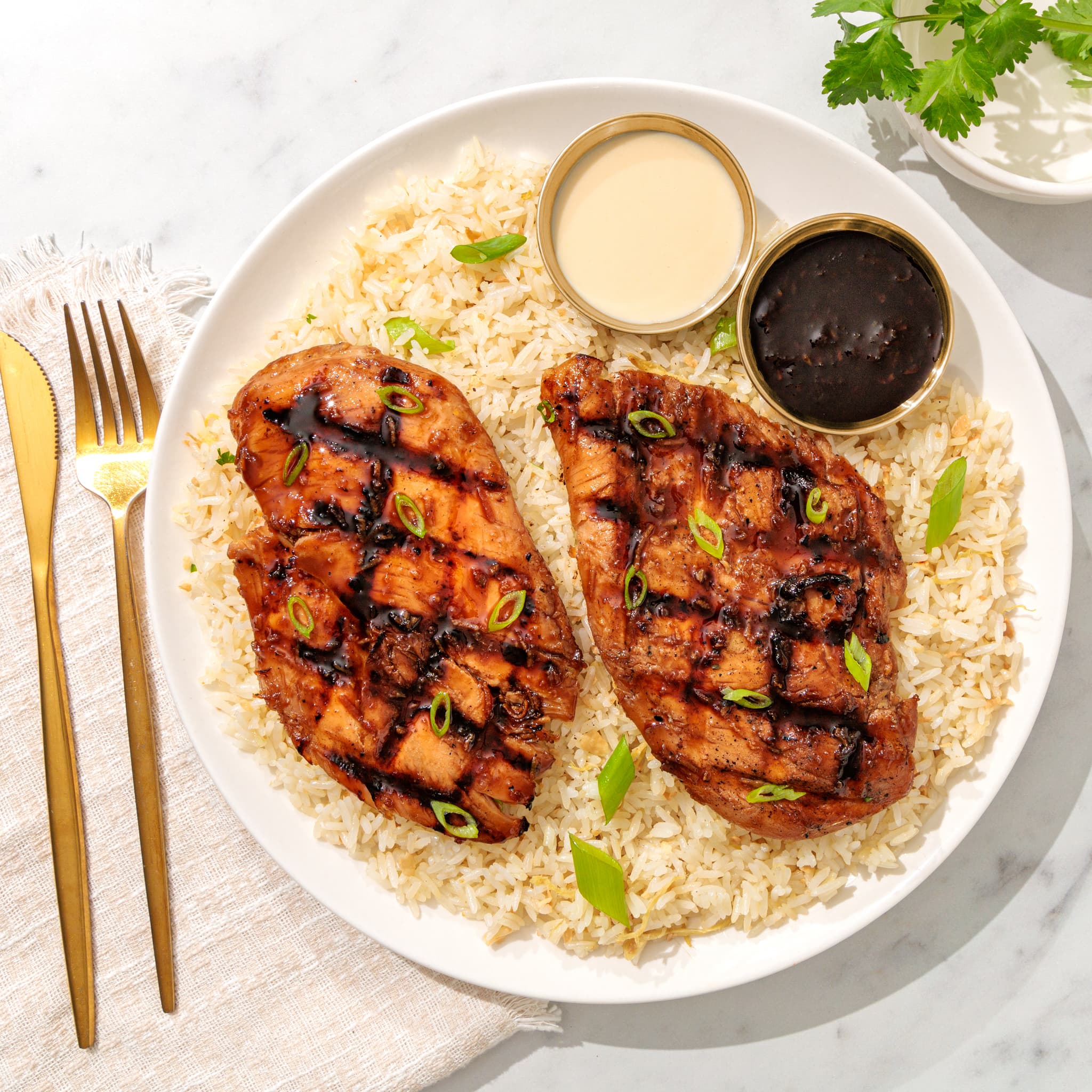
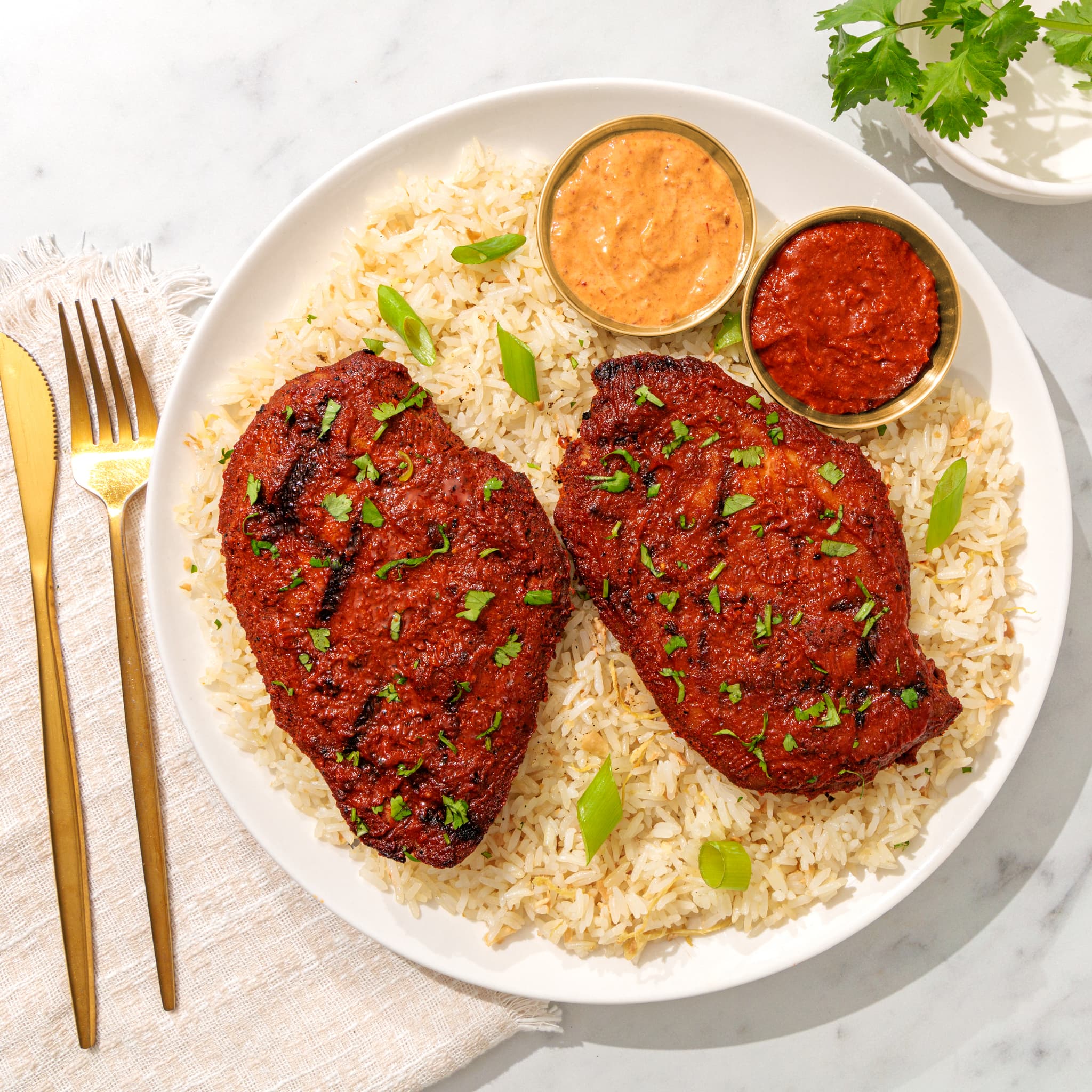
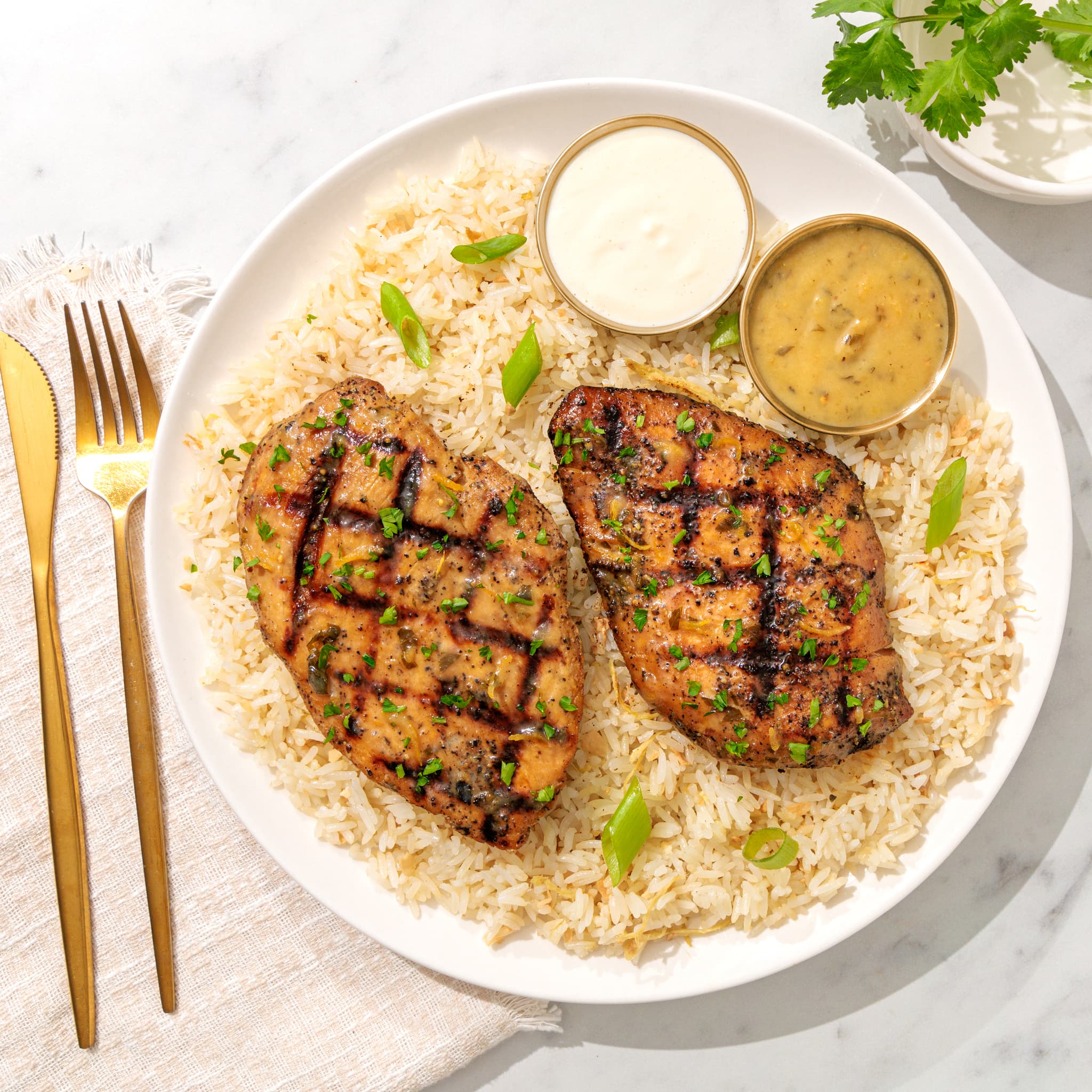
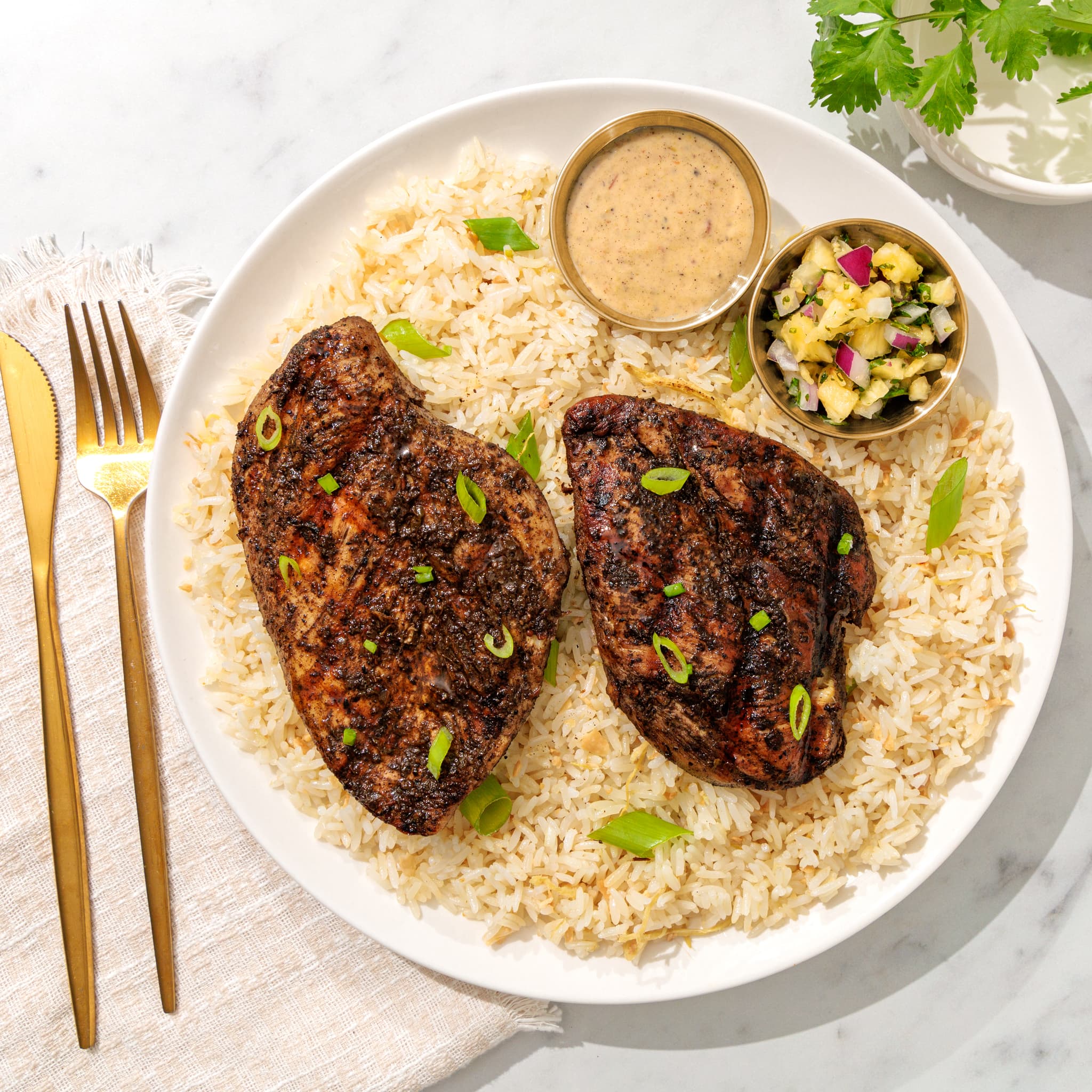
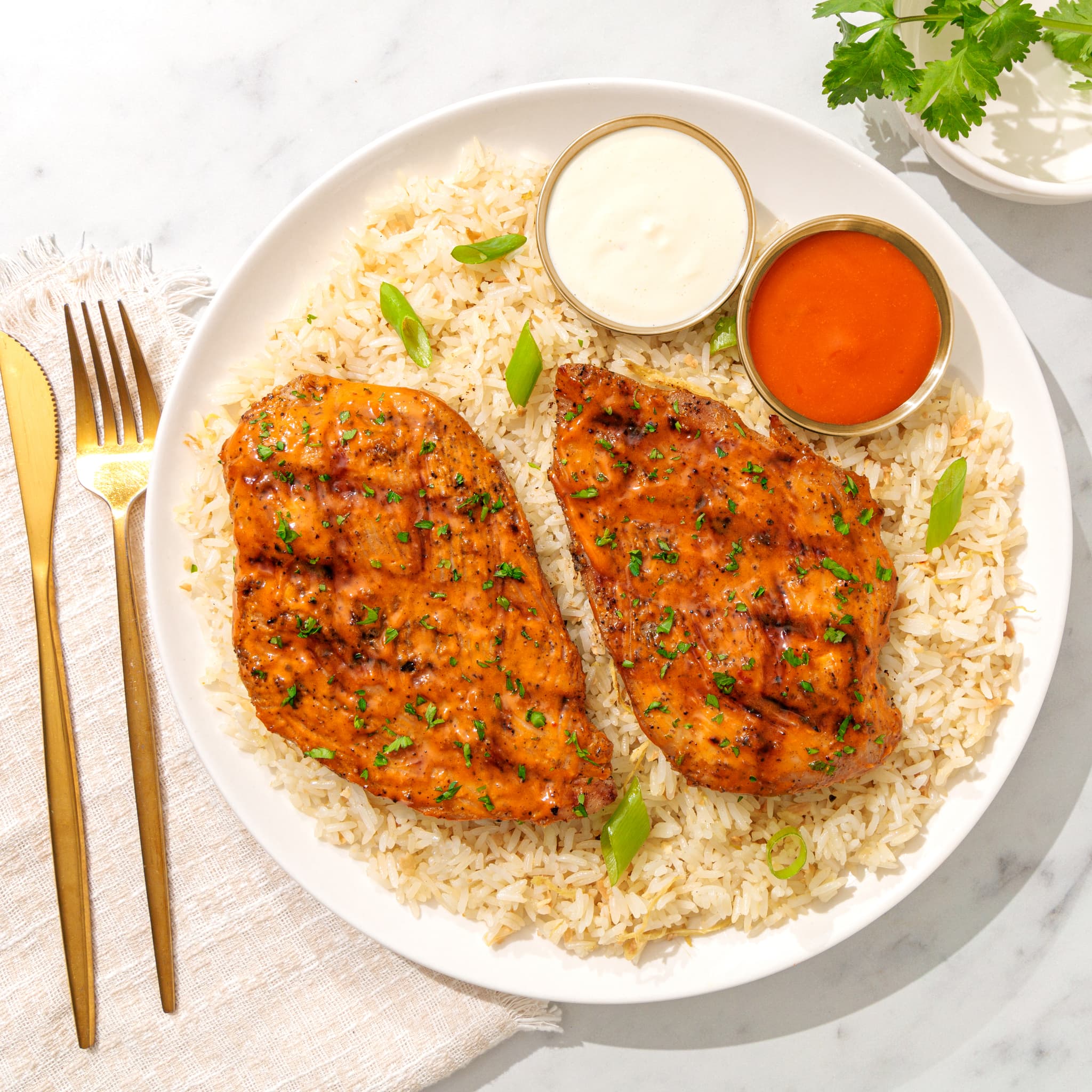
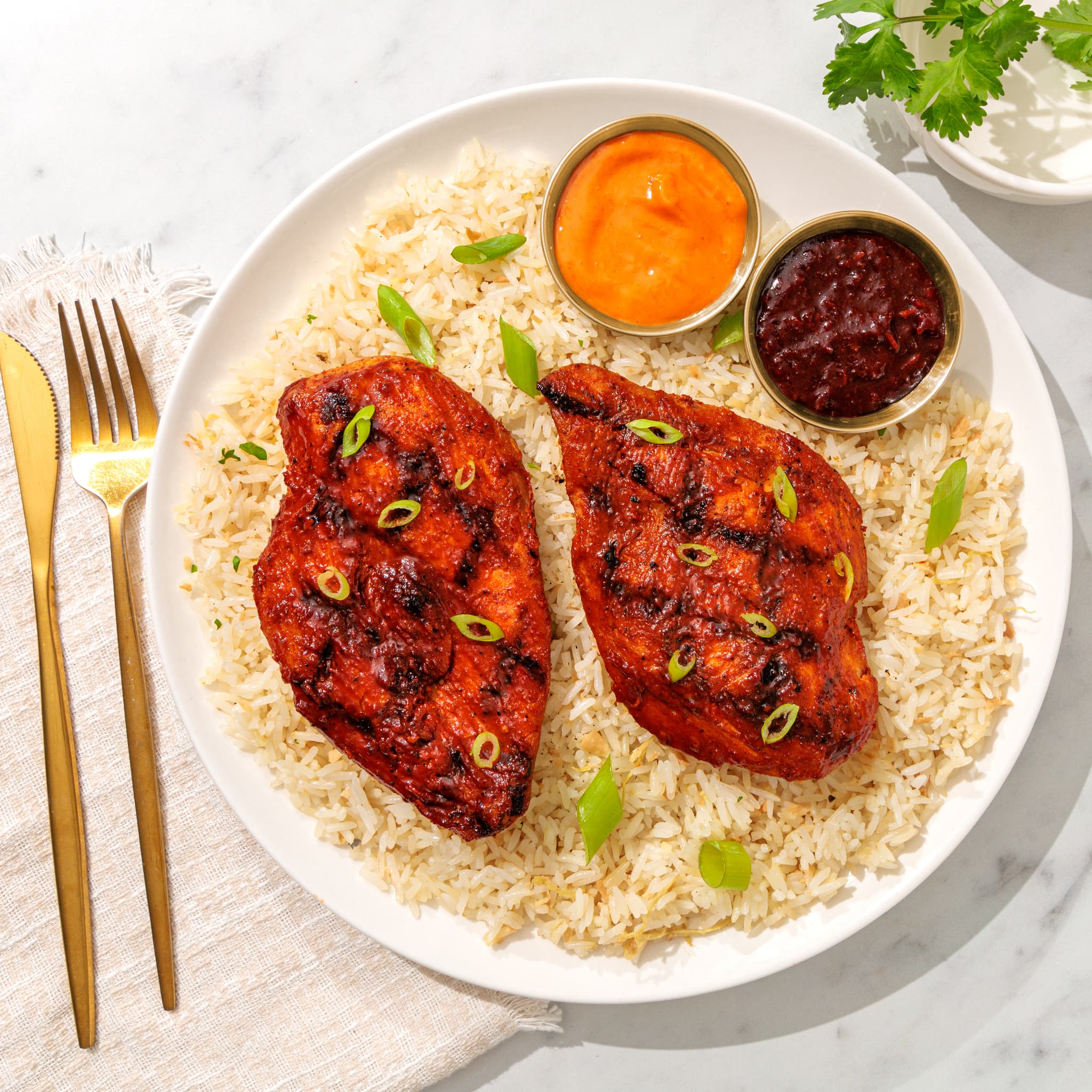
Per meal numbers come from dividing a daily target into realistic meals: 0.4 g/kg four times a day reaches 1.6 g/kg, and up to 0.55 g/kg per meal reaches 2.2 g/kg [Schoenfeld & Aragon 2018]. A SkewerBros meal, with 65 g or more of protein from a 9 oz chicken breast (see the full macros), covers a whole day's per meal target for most people in one sitting.
Is there a limit to how much protein your body can absorb at once?
Not in the way people think. Your gut absorbs nearly all the protein you eat, whatever the amount. The real question is how much your muscles use, and newer research shows that number is much higher than the old rule suggested.
The 30 g myth, and what the 100 g study found
You have probably heard that your body can only use 20-30 g of protein at a time and the rest goes to waste. If that were true a meal with 65G+ protein would make no sense. The research says otherwise.
The rule comes from studies that fed people different doses after a workout and measured muscle building for about 4 hours. Muscle synthesis rose up to about 20 g and then flattened [Moore 2009], with 40 g adding only a little more [Witard 2014]. Those studies had two blind spots:
The early studies trained one muscle group. After a full body workout, 40 g produced more muscle building than 20 g [Macnaughton 2016].
They stopped measuring too soon. A bigger dose takes longer to digest, so its effect lasts longer than four hours.
When researchers measured for 12 hours, the picture changed. Young men did a full body workout and then consumed either 25g or 100g of protein. The 100g dose produced a larger and longer muscle building response than 25 g, and very little of the extra protein was burned for energy [Trommelen 2023].
That study used milk protein in young men after a single workout, so it does not show that one huge meal beats spreading protein out (more on that below). It does show that a large dose is simply not wasted. Your body just takes longer to put it to work.
How Much Protein Is Too Much?
No safe upper limit for protein has been set. In healthy adults, intakes well above the RDA, including 2 g/kg or more, have not been shown to harm the kidneys or bones. The exception is people with existing kidney disease, who should follow their doctor's guidance on protein.
Is too much protein bad for your kidneys?
A review of 28 studies found that higher protein intakes did not change kidney function in healthy adults any more than lower intakes did [Devries 2018]. A 2025 review of the claimed harms of high protein diets found that many of them rest on weak evidence or are contradicted by it [French 2025]. If you already have kidney disease, the picture is different, and your care team should set your target.
Does a high protein diet affect your bones or heart?
For bones, the worry was that protein leaches calcium. A review for the US National Osteoporosis Foundation found no harm from higher protein and a small benefit for spine bone density [Shams-White 2017]. For the heart, the source matters more than the grams. In a large Harvard cohort, protein from processed red meat was linked to higher risk of death, while fish and poultry were not; this was an observational study, so it shows a link rather than proof [Song 2016].
Protein Quality: Not All Grams Are Equal
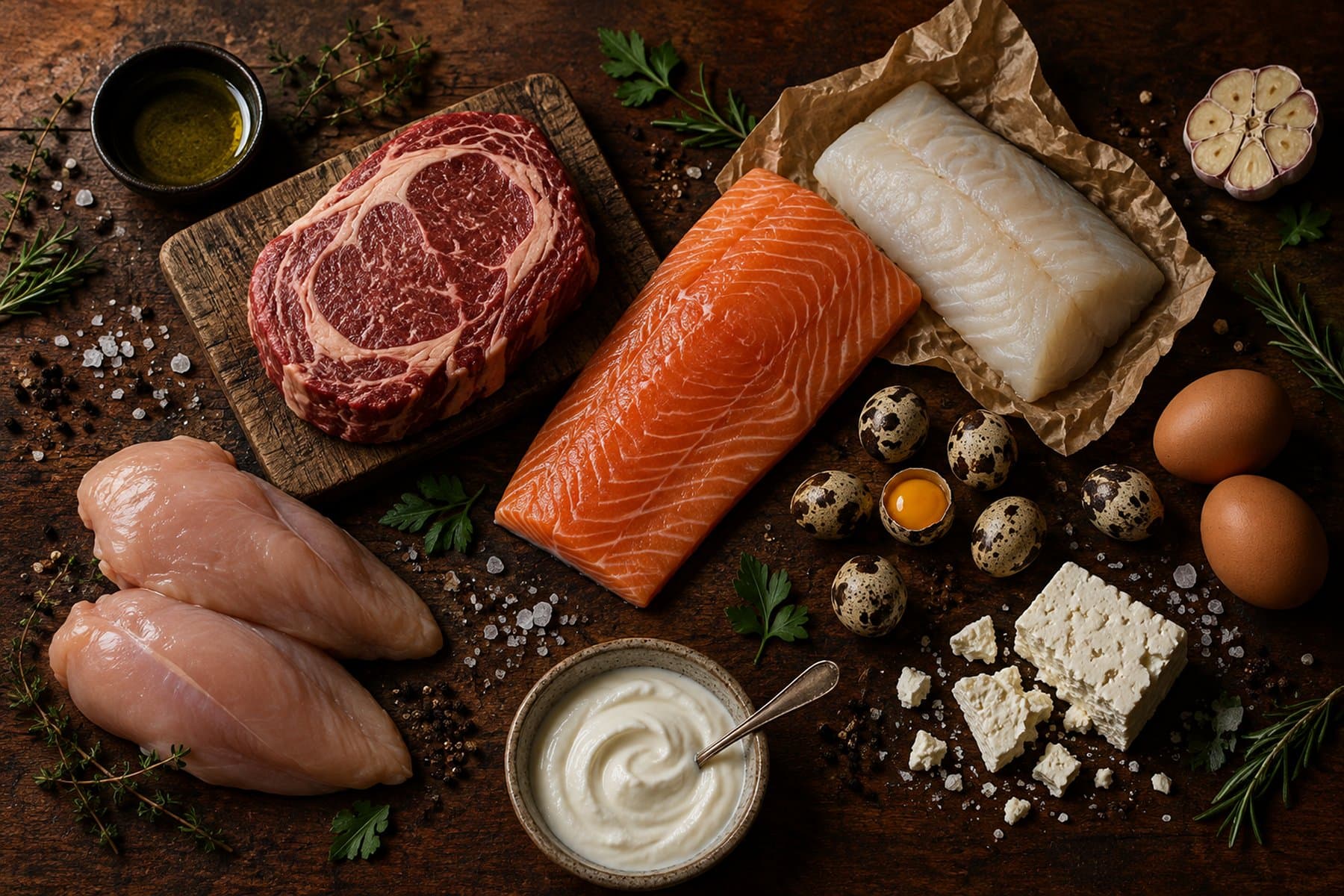
Protein quality depends on whether a food supplies all nine essential amino acids, especially leucine, and how well you digest it. Meat, fish, eggs, dairy and soy are complete. Most plant foods are low in one or two essential amino acids, so you need a mix of them and a little more in total.
Complete vs incomplete protein
A complete protein contains all nine essential amino acids in useful amounts; an incomplete one is low in at least one. That does not make plant protein bad; eating a variety of foods covers the gaps over the day. Our guide to complete protein foods explains which foods qualify and how animal and plant protein compare.
Protein per calorie
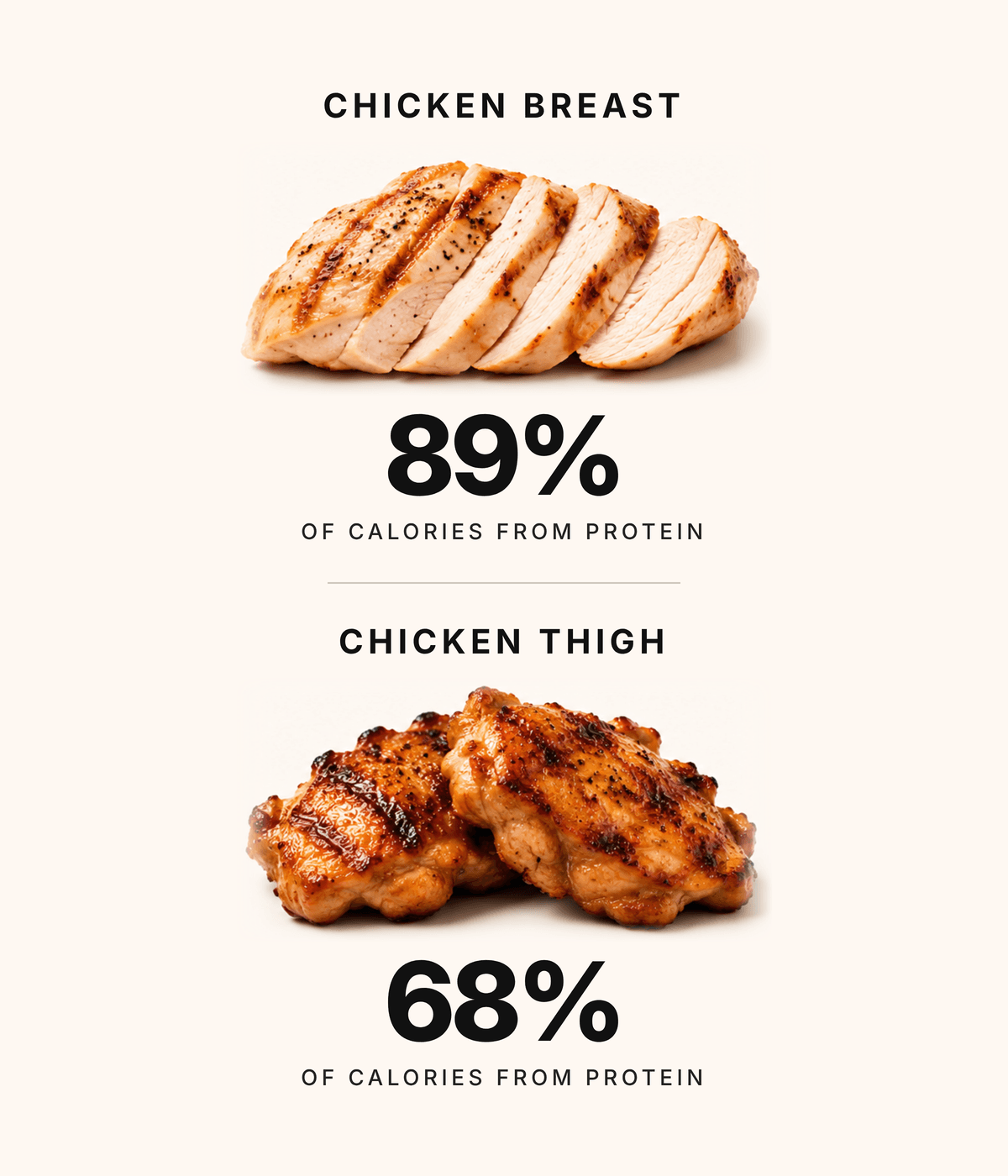
Some foods deliver protein with very few extra calories. Roasted skinless chicken breast has about 31 g of protein and 165 calories per 100 g, so about 75 percent of its calories come from protein [USDA FoodData Central]. That makes it one of the most efficient foods you can eat when calories are limited. See how other foods compare in our ranking of protein dense foods, and whether white or dark meat suits your goal.
How I Hit 225 g of Protein a Day While Staying Under 2,000 calories.
The method is simple: anchor every meal with a lean, protein dense food, add carbs and fibre around training, and choose real food over bars and shakes. The day below reaches about 225 g of protein on roughly 1,800 calories, with two ready-made meals doing most of the work.
200 g a day suits a lifter of about 90 to 100 kg working at 2 g/kg. Most readers need less; use Table 1 to scale it to your weight.
Build every meal around a protein anchor
Start each meal with 30 g or more of protein from chicken, fish, eggs, Greek yogurt or tofu, then add the rest. If your daily target is 1.2 to 1.6 g/kg, building every meal this way gets you there without tracking every gram.
Add carbs and fibre around training
People who train regularly need about 3 to 5 g of carbohydrate per kg of body weight a day, and more on heavy training days [Thomas 2016]. For fibre, aim for about 25 g a day if you are a woman and 38 g if you are a man up to age 50, and 21 g and 30 g after 50 [Health Canada DRIs]. Build up gradually, about 5 g more each week with extra water, so your gut can adjust.
Why real food beats shakes and bars
Protein powders work: whey builds muscle well and is convenient. But a powder or bar gives you protein and little else, and many bars carry added sugar, sweeteners and fillers. Real food brings fibre, vitamins and minerals along with the protein, and a plate of food keeps you fuller than a drink. Shakes are a useful backup, not the foundation.
Table 2. A 200 g protein day (approximate values)
Meal | Food | Protein (g) | Calories |
|---|---|---|---|
Breakfast | 300 g plain 0% Greek yogurt with 1 cup blueberries | 32 | 260 |
Lunch | SKEWERBROS - Greek Souvlaki (9 oz cooked chicken breast) | 68 | 500 |
Snack | 1 can tuna in water (120 g drained) and an apple | 32 | 235 |
Dinner | SKEWERBROS - Teriyaki meal (w. Jasmine rice) | 73 | 636 |
Evening | 4 egg whites with 2 cups steamed broccoli | 22 | 180 |
Total | 227 | 1,811 |
Values for whole foods from [USDA FoodData Central]; SkewerBros values from our macros page. Totals are rounded.
Calculate Your Daily Protein Target
Multiply your body weight in kilograms by your target in grams per kilogram. For a 75 kg adult who trains, 75 × 1.6 = 120 g a day. To convert pounds to kilograms, divide by 2.2. Then divide your daily total by the number of meals you eat.
Find your weight in kg (pounds ÷ 2.2).
Pick your target: 1.2 g/kg if you are active, 1.6 g/kg to build muscle, up to 2.2 g/kg when cutting.
Multiply the two for your daily grams, then divide by your meals for a per meal target.
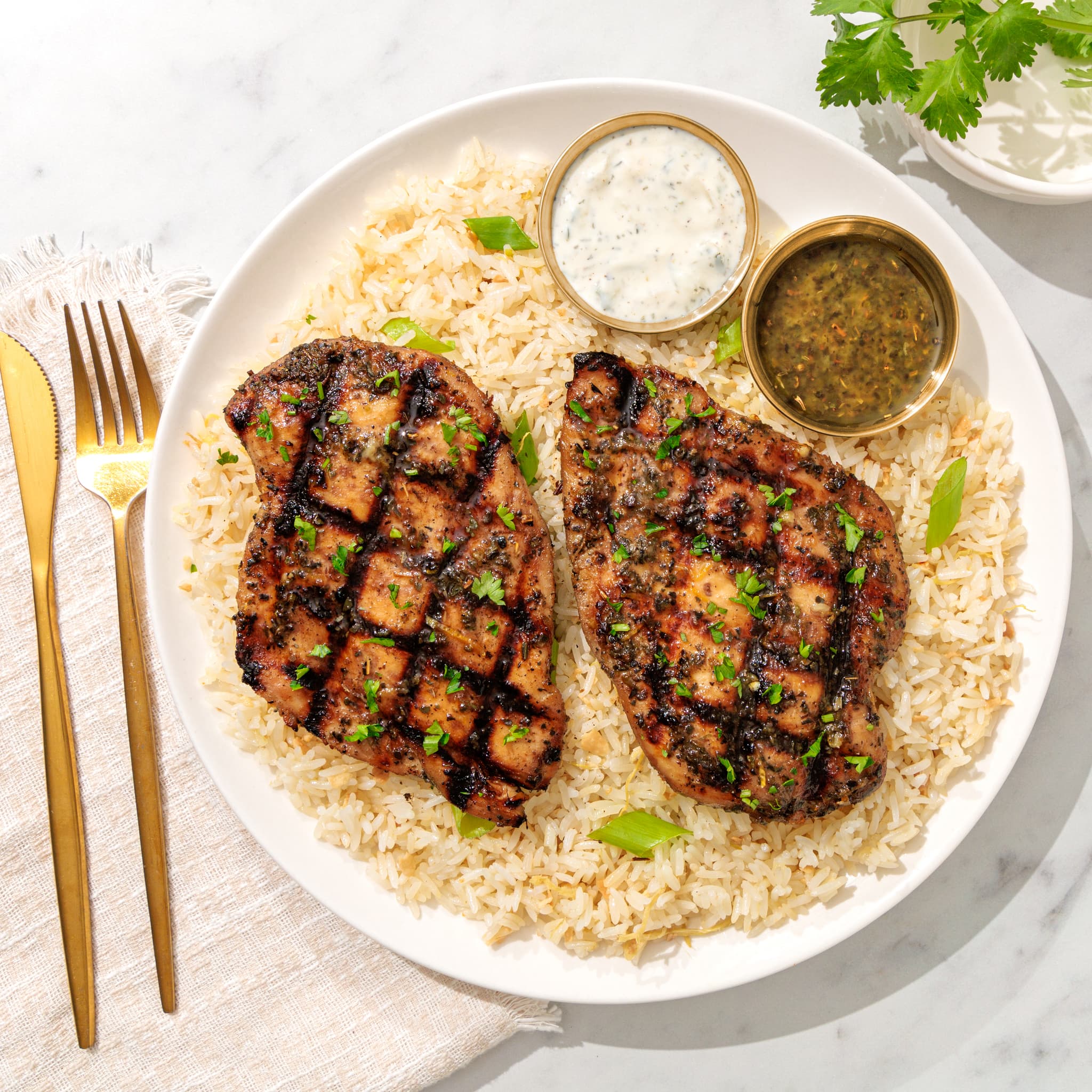
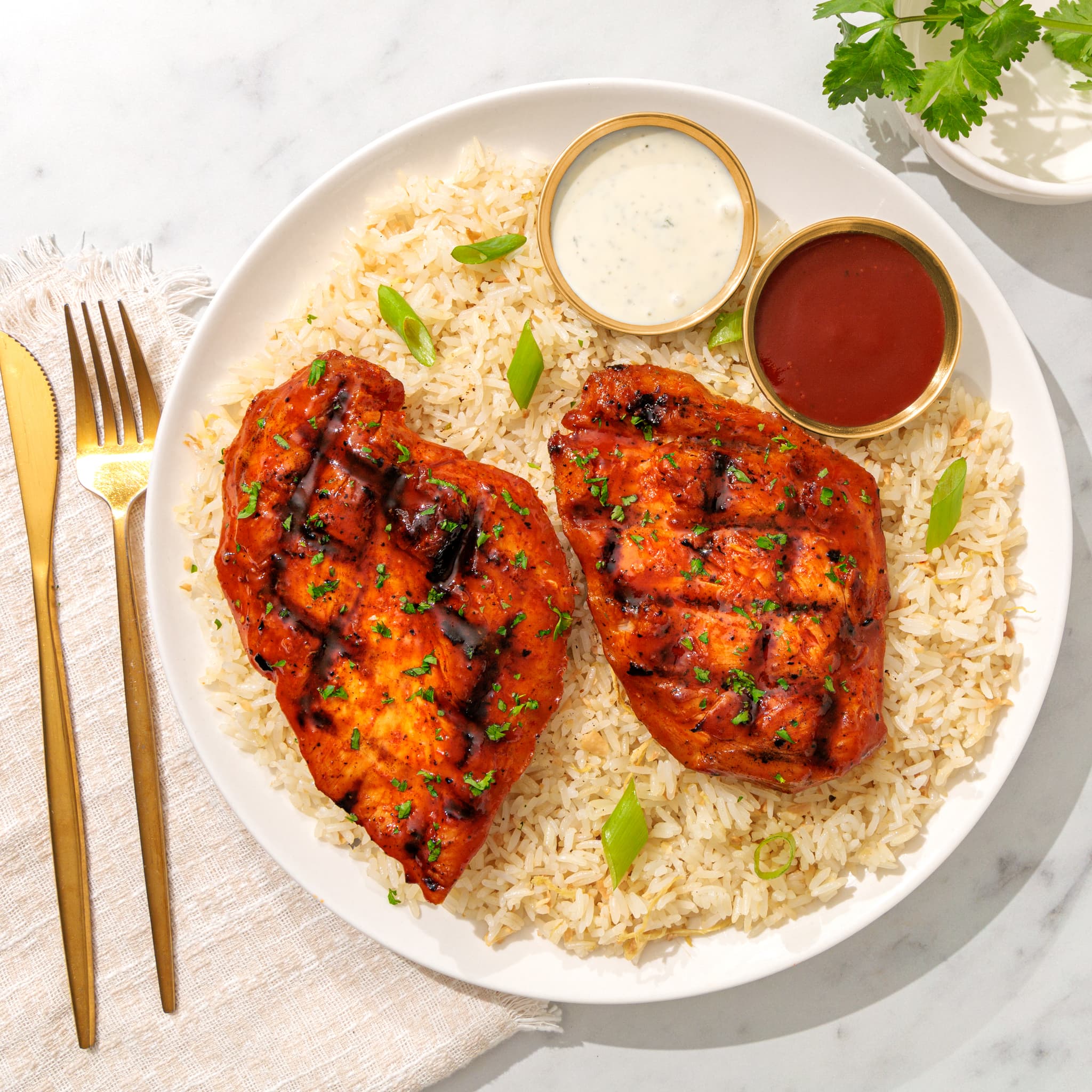
Skip the math. We cooked it.
 Fan favourite
 Fan favourite
FAQ
How much protein do you need per day to build muscle?
About 1.6 g per kg of body weight a day, the point where gains level off on average, and up to 2.2 g/kg to cover people who respond more [Morton 2018]. Training matters more than any single number: protein supports muscle growth, it does not replace the work.
How much protein should I eat in a single meal?
Aim for about 0.4 g/kg per meal, roughly 30 to 40 g for most adults, across at least four meals [Schoenfeld & Aragon 2018]. Eating more in one meal is fine; it is used over a longer period rather than wasted [Trommelen 2023].
Does protein timing matter more than total intake?
No. Total daily protein matters most. Spreading it evenly across the day is a useful second step [Mamerow 2014], and a protein meal within a few hours of training helps, but no timing strategy makes up for a low daily total [Jäger 2017].
What changed in the 2026 protein guidelines?
The 2025-2030 Dietary Guidelines for Americans, released in January 2026, recommend 1.2 to 1.6 g/kg a day and protein at every meal [Dietary Guidelines 2025-2030]. The RDA of 0.8 g/kg, which Canada uses too, did not change. It remains the minimum to avoid deficiency.
Is animal or plant protein better?
For building muscle, animal protein does more per gram because it is higher in leucine and easier to digest. Plant protein can match it if you eat more of it from a variety of sources. For long-term health, both fit; processed meat is the source most often linked to higher risk [Song 2016]. Our guide to complete protein foods covers this in depth.
65 g+ protein per meal. Real food, cooked for you, no seed oils, no refined sugars. See the plans
Sources
Bauer J, et al. Evidence-based recommendations for optimal dietary protein intake in older people (PROT-AGE). Journal of the American Medical Directors Association, 2013. https://doi.org/10.1016/j.jamda.2013.05.021
Devries MC, et al. Changes in kidney function do not differ between healthy adults consuming higher compared with lower or normal protein diets. Journal of Nutrition, 2018. https://doi.org/10.1093/jn/nxy197
US Departments of Agriculture and Health and Human Services. Dietary Guidelines for Americans, 2025-2030. https://www.dietaryguidelines.gov
French SA, et al. The harms of high protein intake: conjectured, postulated, claimed, and presumed, but shown? American Journal of Clinical Nutrition, 2025. https://doi.org/10.1016/j.ajcnut.2025.05.002
Health Canada. Dietary Reference Intakes tables. https://www.canada.ca/en/health-canada/services/food-nutrition/healthy-eating/dietary-reference-intakes/tables.html
Helms ER, et al. Evidence-based recommendations for natural bodybuilding contest preparation: nutrition and supplementation. Journal of the International Society of Sports Nutrition, 2014. https://doi.org/10.1186/1550-2783-11-20
Jäger R, et al. International Society of Sports Nutrition position stand: protein and exercise. Journal of the International Society of Sports Nutrition, 2017. https://doi.org/10.1186/s12970-017-0177-8
Longland TM, et al. Higher compared with lower dietary protein during an energy deficit combined with intense exercise promotes greater lean mass gain and fat mass loss. American Journal of Clinical Nutrition, 2016. https://doi.org/10.3945/ajcn.115.119339
Macnaughton LS, et al. The response of muscle protein synthesis following whole-body resistance exercise is greater following 40 g than 20 g of ingested whey protein. Physiological Reports, 2016. https://doi.org/10.14814/phy2.12893
Mamerow MM, et al. Dietary protein distribution positively influences 24-h muscle protein synthesis in healthy adults. Journal of Nutrition, 2014. https://doi.org/10.3945/jn.113.185280
Moore DR, et al. Ingested protein dose response of muscle and albumin protein synthesis after resistance exercise in young men. American Journal of Clinical Nutrition, 2009. https://doi.org/10.3945/ajcn.2008.26401
Morton RW, et al. A systematic review, meta-analysis and meta-regression of the effect of protein supplementation on resistance training-induced gains in muscle mass and strength. British Journal of Sports Medicine, 2018. https://doi.org/10.1136/bjsports-2017-097608
Phillips SM, et al. Protein requirements beyond the RDA: implications for optimizing health. Applied Physiology, Nutrition, and Metabolism, 2016. https://doi.org/10.1139/apnm-2015-0550
Schoenfeld BJ, Aragon AA. How much protein can the body use in a single meal for muscle-building? Journal of the International Society of Sports Nutrition, 2018. https://doi.org/10.1186/s12970-018-0215-1
Shams-White MM, et al. Dietary protein and bone health: a systematic review and meta-analysis from the National Osteoporosis Foundation. American Journal of Clinical Nutrition, 2017. https://doi.org/10.3945/ajcn.116.145110
Song M, et al. Association of animal and plant protein intake with all-cause and cause-specific mortality. JAMA Internal Medicine, 2016. https://doi.org/10.1001/jamainternmed.2016.4182
Thomas DT, et al. Position of the Academy of Nutrition and Dietetics, Dietitians of Canada, and the American College of Sports Medicine: nutrition and athletic performance. 2016. https://doi.org/10.1016/j.jand.2015.12.006
Trommelen J, et al. The anabolic response to protein ingestion during recovery from exercise has no upper limit in magnitude and duration in vivo in humans. Cell Reports Medicine, 2023. https://doi.org/10.1016/j.xcrm.2023.101324
US Department of Agriculture. FoodData Central. https://fdc.nal.usda.gov
Witard OC, et al. Myofibrillar muscle protein synthesis rates subsequent to a meal in response to increasing doses of whey protein at rest and after resistance exercise. American Journal of Clinical Nutrition, 2014. https://doi.org/10.3945/ajcn.112.055517
You’ve got your number. Now hit it without weighing a thing.
Every SkewerBros meal lands 65G+ protein from brined, slow-cooked chicken breast. No seed oils. No refined sugar. Just dinner, done.
See meal plans →